

Imagine opening an old cardboard box and discovering 97 apparently brand-new Nintendo games inside.
Not Switch games.
Not Nintendo 64 games.
We’re talking about 97 pristine NES cartridges that had been sitting untouched for decades.
That would already be a pretty spectacular retro-gaming discovery, but this particular box had another surprise waiting inside.
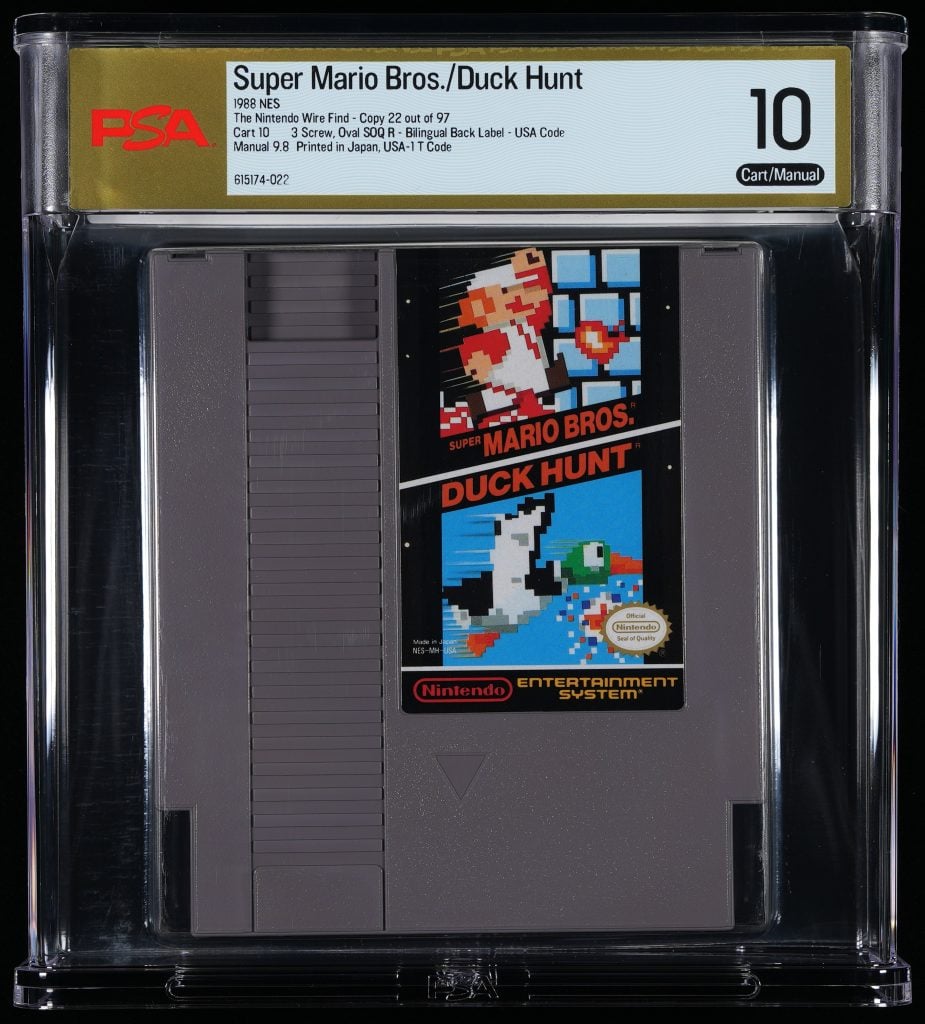
The games were copies of the incredibly common Super Mario Bros./Duck Hunt combination cartridge — except closer examination revealed that they appeared to belong to a previously undocumented production variant.
And after the cartridges were sent away for professional grading, five of them achieved something that had apparently never happened before:
A perfect PSA 10 grade for an NES cartridge.
Not bad for a pile of games that were reportedly supposed to be melted down for scrap.
A Box Full of Mario History
If you spent much time around the NES, there’s a good chance you recognise Super Mario Bros./Duck Hunt immediately.
It combined two of the console’s most famous games on a single cartridge.
On one side of the experience you could rescue Princess Peach, stomp Goombas and repeatedly discover that the princess was apparently in another castle.
On the other, you could shoot ducks before being openly mocked by one of the most irritating dogs in video game history.
The NES was apparently capable of emotional damage long before online multiplayer existed.
Because the cartridge was included with millions of NES systems, Super Mario Bros./Duck Hunt is hardly considered rare.
In fact, there are probably enough loose copies floating around to construct a reasonably sturdy garden shed.
That’s what makes this discovery so interesting.
These weren’t simply unusually clean examples of an old game.
They appeared to be something collectors hadn’t documented before.
The Cartridges That Were Supposed to Be Destroyed
The box belonged to Kevin Braun, owner of Wisconsin retro game store OneStopWonders.
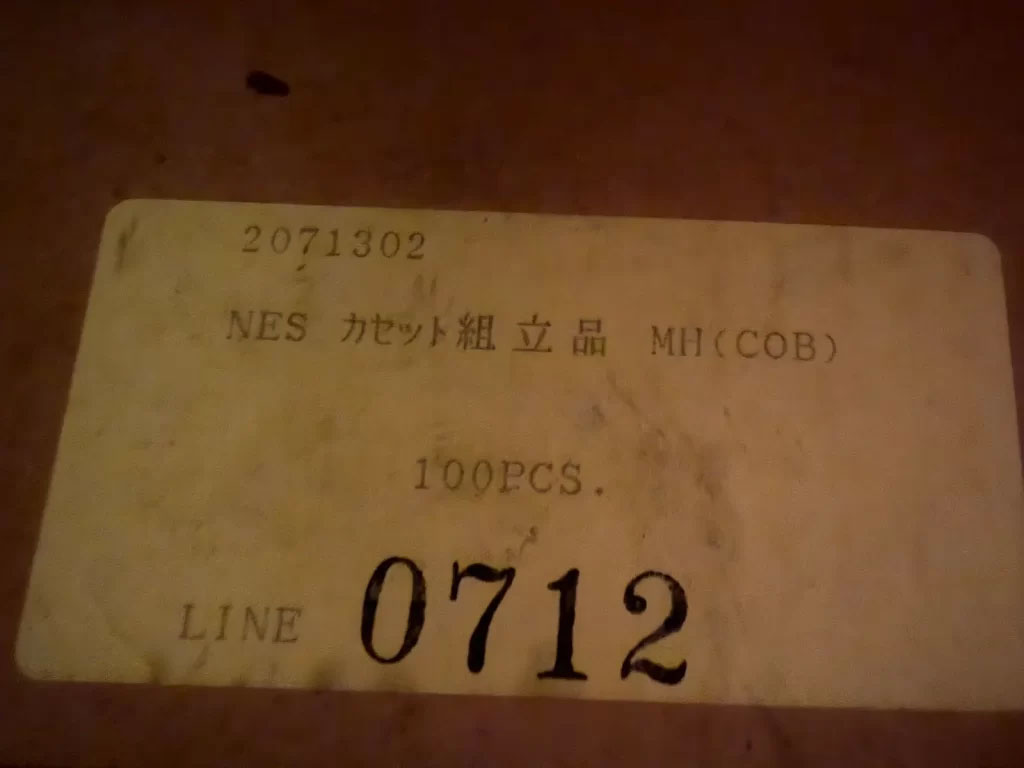
Years earlier, Braun had acquired the box from someone whose grandfather had operated a precious-metal recovery business.
According to the story reported by Nintendo Wire, the company worked with various businesses — including Nintendo — recovering valuable metals from unwanted electronics and circuit boards.
That included the small amount of gold used on cartridge contacts.
Which means these Mario cartridges were apparently destined to be destroyed so their gold could be recovered.
Thankfully, somebody seems to have looked at a box containing 100 Nintendo games and decided:
Eh. I’ll melt those tomorrow.
Tomorrow then became more than two decades.
Eventually the box reached Braun’s retro game store, where it was stored away beneath old Halloween decorations and largely forgotten.
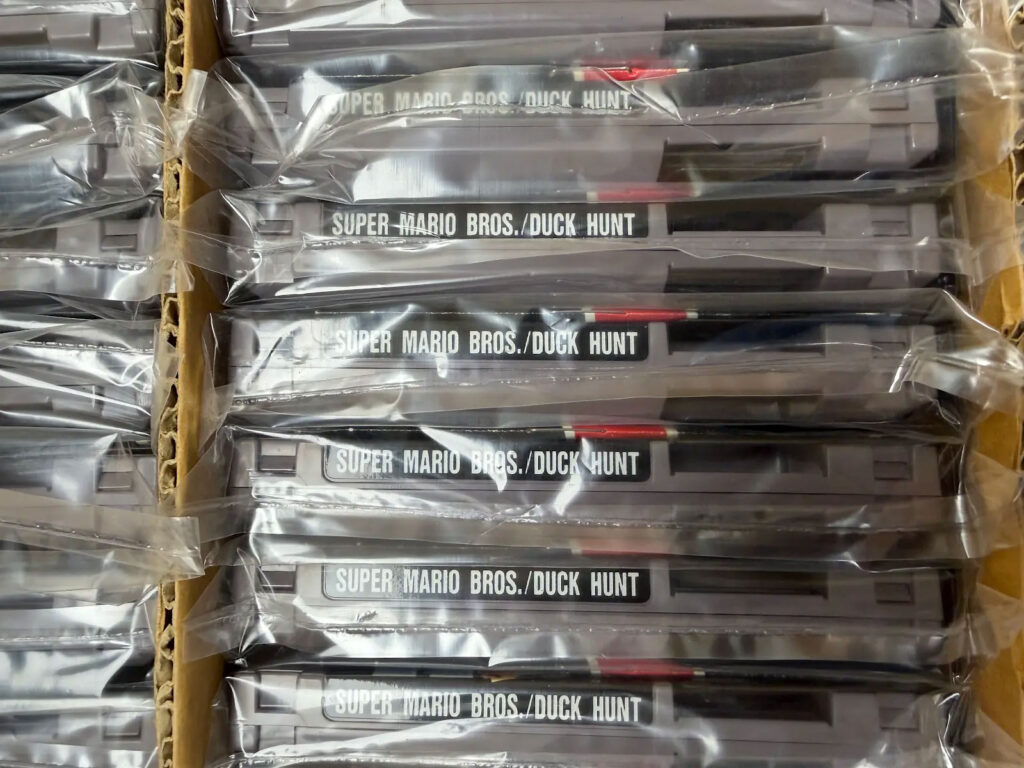
So while collectors around the world were obsessively hunting down obscure NES variants, a box containing potentially undocumented Nintendo history was apparently sitting underneath plastic skeletons and fake spiderwebs.
Perfect.
100 Cartridges Became 97
Braun initially believed the cartridges were probably worth somewhere around $10–$15 each.
That makes complete sense.
Again, Super Mario Bros./Duck Hunt is one of the most common NES games ever made.
But when Nintendo Wire editor Jason Ganos learned about the box, he wanted to investigate it further.
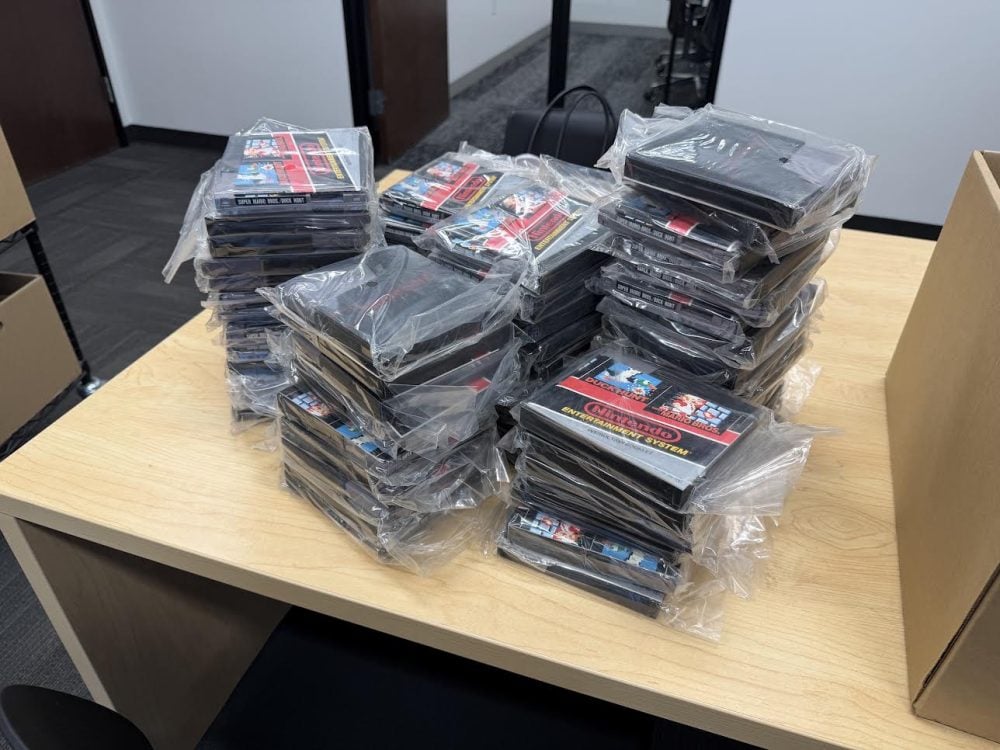
Inside were 97 individually bagged cartridges, each accompanied by what appeared to be a pristine instruction manual.
Interestingly, the original shipping label indicated that the box had once contained 100 cartridges.
So somewhere along the way, three disappeared.
Maybe they’re still out there.
One became an accountant.
One moved to Canada.
And the third is probably still wedged inside somebody’s NES because they forgot that you have to push the cartridge down before pulling it out.
Something About These Cartridges Was Different
Initially, the games simply looked like remarkably well-preserved copies of a common cartridge.
Then photographs were shared with game collectors and grading experts.
That’s when things started getting interesting.
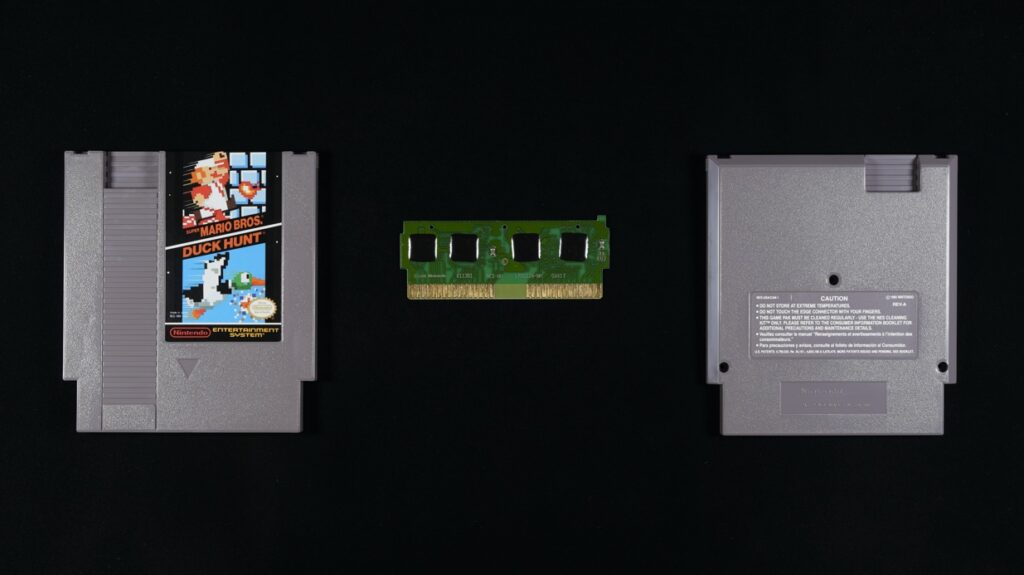
The cartridges featured a multilingual rear label that apparently hadn’t previously been documented by collectors.
Manufacturing codes found on both the cartridges and their accompanying manuals also pointed toward a surprisingly late production date.
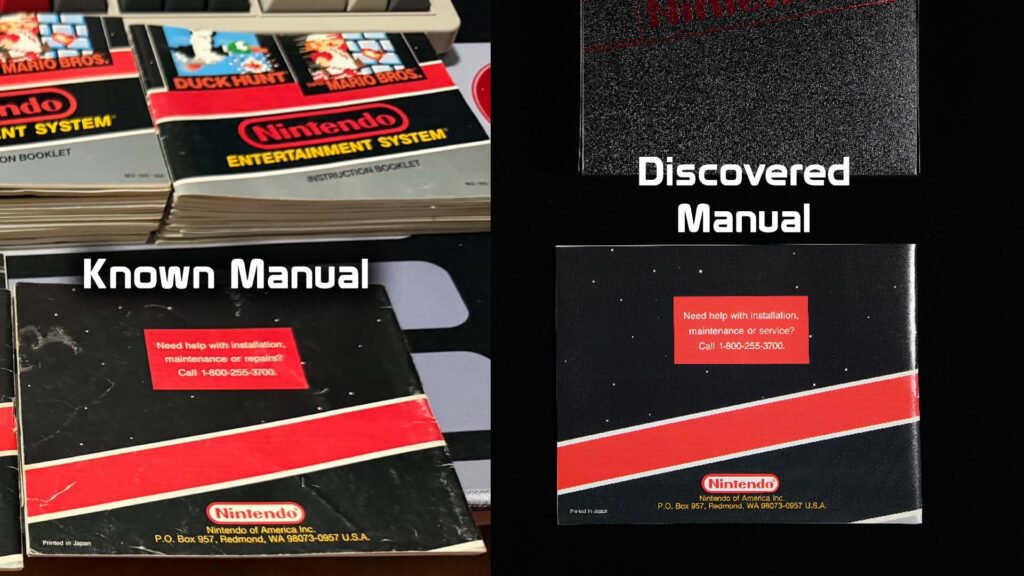
There were even small differences in the instruction manual text.
Earlier documented manuals reportedly used the wording:
“maintenance or repairs”
while these newly discovered examples used:
“maintenance or service.”
To most normal human beings, that difference is almost impressively unimportant.
To serious video game collectors, however, two changed words in an instruction manual might as well be the discovery of another Egyptian pyramid.
Tiny manufacturing differences can reveal entirely new production runs, revisions and pieces of console history.
Were These Some of the Last Copies Ever Produced?
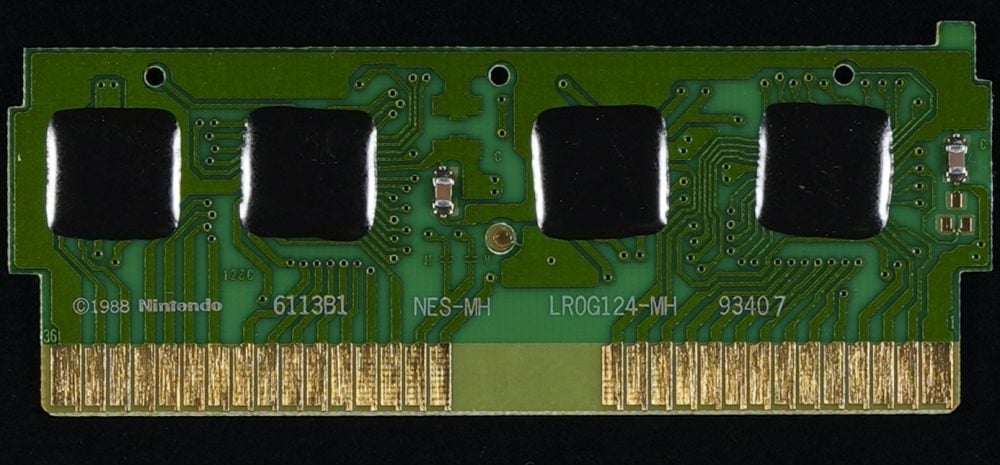
One of the most intriguing clues was the manufacturing code found on the box.
The code 9340 indicates production during the 40th week of 1993.
That places these cartridges extremely late in the commercial life of this particular NES release.
More importantly, the known console bundles normally associated with Super Mario Bros./Duck Hunt were no longer being sold by that point.
So why was Nintendo apparently still producing them?
That question hasn’t been definitively answered.
One possibility is that the cartridges were manufactured as replacement stock for warranty claims or refurbished NES consoles.
Another theory is that they were intended for some form of console bundle that was planned but ultimately never released.
There may be another explanation entirely.
For now, that mystery is part of what makes the discovery so fascinating.
These cartridges may represent one of the final production runs of Super Mario Bros./Duck Hunt.
Then Came the PSA Grades
Braun and Ganos eventually decided to have the cartridges professionally authenticated and graded by PSA.
And rather than casually popping 97 potentially valuable NES cartridges into the mail, Ganos reportedly packed the whole lot into his carry-on luggage and flew from Milwaukee to PSA’s headquarters in California.
Imagine being airport security for that one.
“Sir, could you explain why your luggage contains 97 identical circuit boards?”
“Yes. I need them to fight turtles and shoot ducks.”
Completely reasonable.
Once grading began, the results were remarkably high.
Many of the cartridges reportedly received grades of 9.6 or 9.8.
Then one received something much more significant.
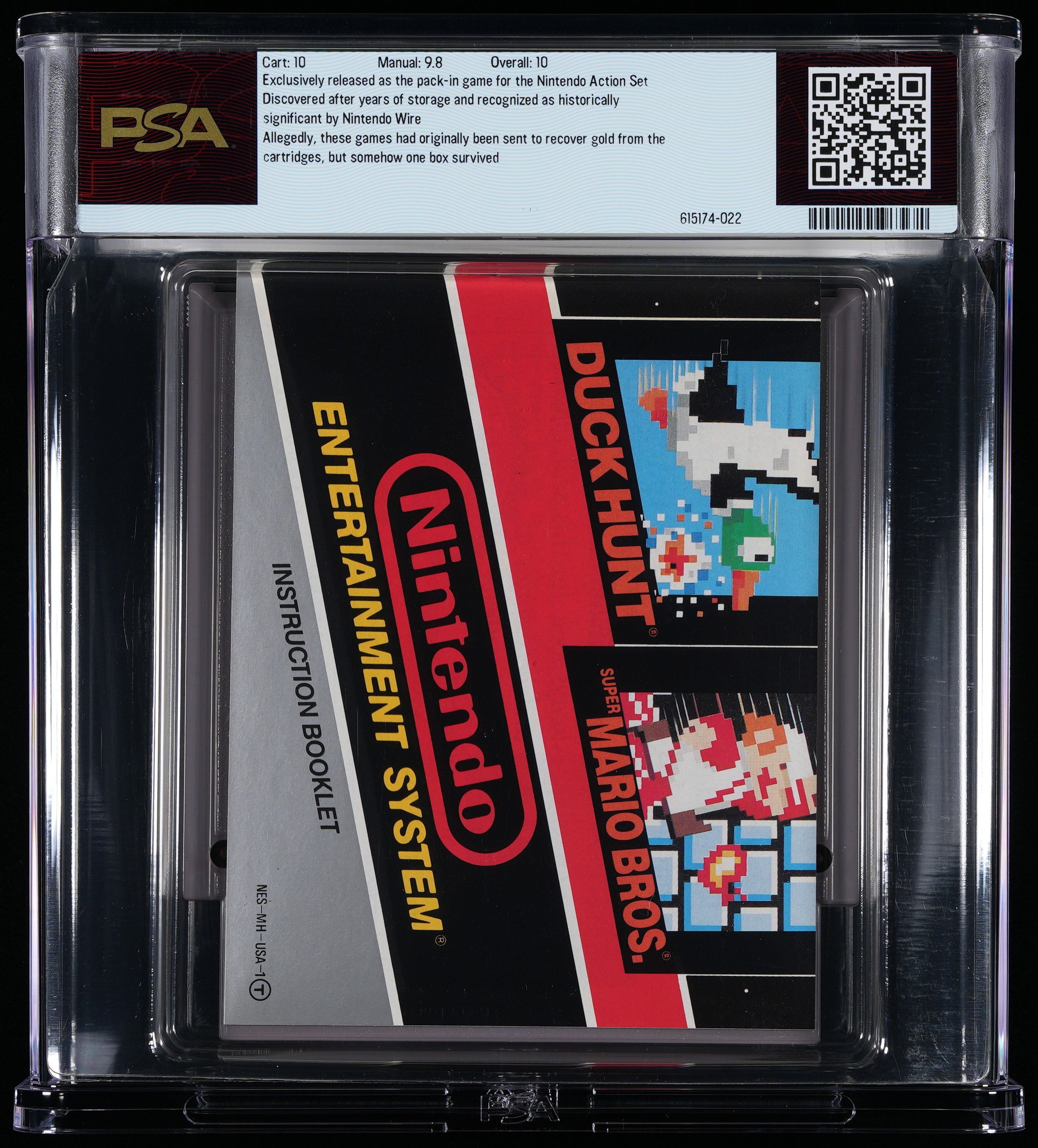
A PSA 10.
According to the report, this was the first perfect PSA 10 grade ever awarded to an NES cartridge.
And it wasn’t the only one.
By the time grading was complete, five of the Super Mario Bros./Duck Hunt cartridges had achieved PSA 10 status.
Five perfect NES grades.
From one forgotten cardboard box.
Containing games that had supposedly once been destined for destruction.
Retro gaming can be wonderfully ridiculous sometimes.
How Much Are They Worth?
That is the obvious question.
And the answer is: we don’t really know yet.
Super Mario Bros./Duck Hunt itself is extremely common, so these aren’t valuable simply because of the game printed on the label.
What makes these examples unusual is the combination of factors surrounding them:
They belong to a previously undocumented variant, may represent an unusually late production run, survived in essentially unused condition and include the first NES cartridges to achieve perfect PSA 10 grades.
That makes them very different from the loose Super Mario Bros./Duck Hunt cartridge sitting in somebody’s cupboard.
Some of the collection is expected to remain with Braun and Ganos, while other cartridges are planned for sale or charity auctions.
One of the PSA 10 examples was scheduled to appear in a Goldin auction beginning August 12, 2026.
What somebody will ultimately pay for one is anyone’s guess.
Collectors have demonstrated plenty of enthusiasm for unusual pieces of Nintendo history before.
Maybe start checking behind the sofa for a few extra coins.
From Scrap Metal to Gaming History
The most entertaining part of this entire story might be just how close these games apparently came to disappearing completely.
At one point, they were little more than unwanted circuit boards containing tiny amounts of recoverable gold.
Instead, they survived.
Then they spent decades forgotten in storage.
Eventually somebody realised that the supposedly mundane box of common NES games contained something nobody had properly documented.
It’s a fantastic reminder that video game history isn’t always discovered inside Nintendo archives or carefully preserved museum collections.
Sometimes it’s sitting underneath the Halloween decorations in the back of a retro game store.
And that raises an even more exciting question:
What else is still out there?
There must be prototypes, unusual production variants, development cartridges, promotional items and strange bits of gaming history still sitting unnoticed in warehouses, garages and forgotten cardboard boxes around the world.
These 97 cartridges looked like copies of one of the most common games ever released for the NES.
Instead, they managed to reveal another tiny piece of Nintendo history more than 30 years after they were manufactured.
And five of them made grading history along the way.
Not bad for a game cartridge featuring an Italian plumber and a dog that laughs at you.
What Would You Do With One?
If one of these cartridges somehow landed in your collection, what would you do?
Would you keep it safely graded and display it?
Sell it while collectors are interested?
Or commit the ultimate act of retro-gaming sacrilege:
crack open the PSA case, put the cartridge into an NES and play World 1-1?
Let us know what you’d do in the comments!
You can also check out the original Nintendo Wire investigation for the full story behind this remarkable discovery.




Comments are closed, but trackbacks and pingbacks are open.